
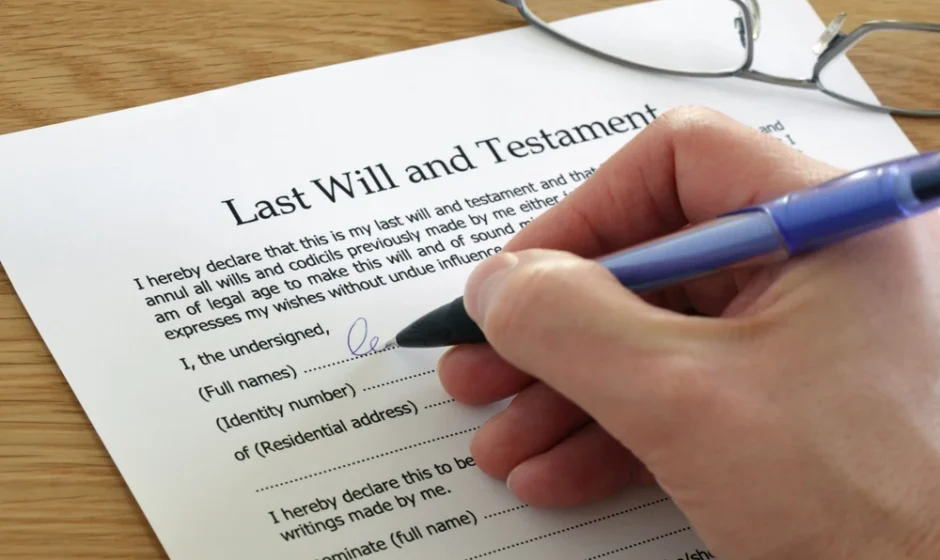

You should remember that creating a will is something many people tend to postpone. It is understandable because thinking about what happens after your death is not exactly something you want to do during your free time. However, having a will is one of the most important steps you can take to protect your family, property and wishes.
A will is a legal document that explains how you want your assets and property distributed after you pass away. Depending on your situation, it can also address guardianship for minor children and name the person who should handle your estate. As soon as you enter here, you will learn more about making a will.
Many people assume that wills are only necessary for wealthy individuals with large estates. However, you do not need to own multiple properties or have significant savings to benefit from creating one.
The main idea is to determine whether your current circumstances make estate planning something you should consider sooner rather than later. In further article, we will talk about the most common signs that it may be time to write a will. Let us start from the beginning.
You Own Property
One of the most common reasons to create a will is owning property. It does not matter whether you own a family home, apartment, vacation property, land or another type of real estate, because you should determine what happens to it after your passing.
Without a will, the distribution of your estate generally depends on the intestacy laws where you live. It means that state law, rather than your personal preferences, can determine who inherits certain assets.
Writing a will gives you more control over the process and allows you to clearly state your intentions. This can be especially important if you have several potential beneficiaries or specific ideas about who should receive your property.
You Have Children
Having children is another major sign that you should consider creating a will. The process becomes even more important if your children are minors.
Apart from determining how assets should be distributed, parents can use estate-planning documents to address who they would prefer to care for their children if both parents pass away.
You may also want to think about how inherited money and property should be managed until your children reach a suitable age. We recommend you check out more on Futura Planning, which will guide you on the process.
Therefore, creating a will is not just about deciding who receives your belongings. For parents, it can become an important part of preparing for their children’s financial security and future.
You Got Married or Divorced
Major relationship changes are perfect moments to review your estate-planning situation. Marriage can significantly change your financial responsibilities, ownership arrangements and the people you want to include in your will.
The same thing goes for divorce. If you already have a will, you should review it after a divorce or separation to determine whether it still reflects your wishes.
Suppose you created a will years ago when your family situation was completely different. In that case, relying on the same document without reviewing it may lead to unwanted outcomes.
That is why estate planning should not necessarily be viewed as something you do once and forget about. Your will should reflect your current life and circumstances.
You Have Significant Financial Assets
You do not have to be wealthy to write a will. Still, the more assets you accumulate, the more important it becomes to have a clear plan.
These assets may include savings, investments, valuable personal belongings, business interests and other property. You may want specific assets to go to specific people rather than allowing distribution to happen according to default legal rules.
Another important consideration is that not every asset is necessarily controlled by a will. Certain accounts, jointly owned assets and policies may pass according to beneficiary designations or ownership arrangements.
Therefore, you should understand what your will can control and how it works together with other parts of your financial situation.
You Own a Business
Business ownership can make estate planning more complicated. If you own a company or have an interest in a partnership, you should think about what happens to that ownership after your death.
You may want a family member to inherit your interest, while another business owner may prefer to arrange for his or her share to be sold or transferred.
Without proper planning, uncertainty surrounding ownership can affect your family as well as employees, partners and the future operation of the business.
The main idea is to create a clear plan before an unexpected situation happens.
You Want Specific People to Receive Specific Things

Sometimes the reason for creating a will is straightforward. You simply know that certain belongings should go to certain people.
You may want a family member to receive jewellery, artwork, a vehicle, collections or sentimental possessions. Although these items may not always have tremendous financial value, they can have significant emotional importance.
Clearly explaining your wishes can reduce uncertainty and potential disagreements among family members after your passing. Visit this link: https://vimeo.com/1004215051 to learn more about the topic.
Your Family Situation Is Complicated
Modern families can include children from previous relationships, stepchildren, unmarried partners and numerous other arrangements.
In these situations, assuming that everything will automatically be distributed according to your wishes can create problems.
A will allows you to clearly identify beneficiaries and explain how you want your estate handled. The more complicated your family and financial situation becomes, the more important clarity can be.
You Keep Thinking You Will Do It Later
One of the clearest signs that you should write a will is continually telling yourself that you will deal with it sometime in the future.
The problem is that there is rarely a perfect moment for estate planning. People tend to postpone it because they feel too young, do not own enough assets or simply do not want to think about death.
Still, creating a will does not mean that you expect something bad to happen. Instead, it is a practical way to organise your affairs and reduce potential uncertainty for people you care about.